
In the rapidly evolving world of startups, securing funding is the lifeblood of growth and innovation. In 2026, this endeavor no longer relies solely on personal networks and intuition; it has entered a new era shaped by AI technologies that are redefining how opportunities are discovered, evaluated, and funded.
What's New: AI at the Heart of Funding
2026 has witnessed a significant increase in the integration of AI into startup funding processes. AI is no longer just an auxiliary tool; it has become an integral part of investment decision-making, especially in early-stage funding rounds. Statistics show that AI has captured an unprecedented share of global startup funding. In Q1 2026, AI companies attracted 80% of all global venture capital funding, amounting to $242 billion in a single quarter, up from just 55% a year prior. Total global venture funding for the first three quarters of 2026 reached $679 billion, the highest on record for the same period.
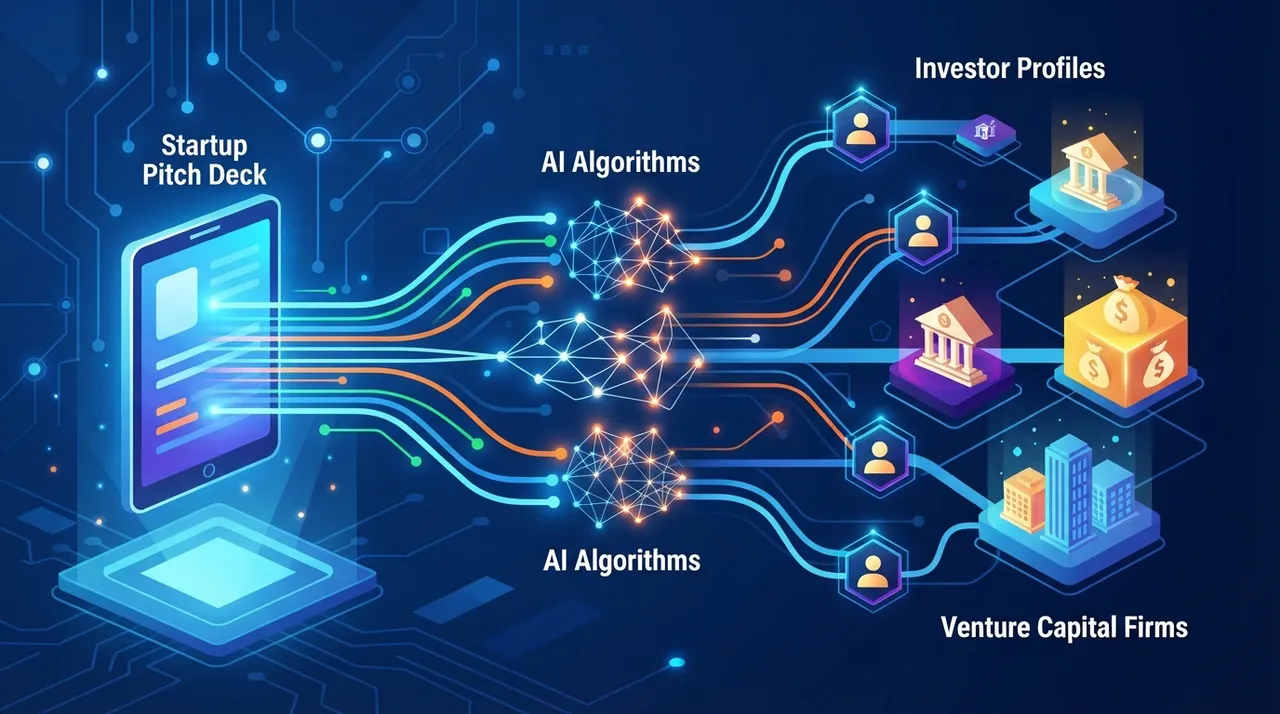
Venture capital firms are increasingly using AI tools to automate arduous research tasks such as pitch deck evaluation, matching startups with suitable investors from vast databases of tens of thousands of funds and angel investors, personalizing outreach at scale, and even managing self-updating CRM systems. In fact, 75% of startups raising between $1 million and $2 million at the seed stage rely significantly or entirely on AI.
Why it Matters: Unparalleled Efficiency and Accuracy
This trend is rapidly gaining traction for several fundamental reasons:
- Increased Efficiency and Speed of Decision-Making: AI tools enable investors to process a far greater number of deals and analyze financial, legal, and other critical documents much faster than humans can. This reduces due diligence time from weeks to hours.
- Improved Targeting and Opportunity Identification: Instead of relying on manual research or personal networks, AI-powered investor matching platforms allow startups to find investors whose interests (stage, sector, check size, geography) align precisely with their business. This minimizes wasted time and effort on contacting unsuitable investors.
- Predictive Analytics for Risk and Opportunity Assessment: Both startups and investors use AI-powered predictive analytics to forecast startup success potential, analyze market trends, customer behavior, and revenue projections, leading to more informed investment decisions and reduced risk.
- Personalized Communication: Generative AI contributes to crafting personalized outreach messages for investors, increasing response rates and enhancing engagement.
Real-World Examples:
- Evalyze.ai: A platform that uses AI to score startup readiness for funding, review pitch decks, match companies with over 20,000 verified investors, and draft outreach messages.
- Metal: An AI-driven operating system designed for founders raising venture rounds, enabling investor discovery through pattern matching, relationship mapping, and outreach automation.
- Affinity: A CRM platform that uses AI to automatically capture relationship data and surface deal insights, accelerating decision-making for investors.
- Tanka AI Fundraise Agent: A tool that automates investor research, personalized message drafting, and follow-up sequences, allowing founders to focus on core tasks.
How Readers Can Practically Benefit (Tools/Steps):
As a startup founder or investor, you can harness the power of AI to enhance your funding prospects:
- Precisely Target Investors: Utilize AI-powered investor matching platforms (e.g., Evalyze.ai, Metal, Harmonic) to narrow down your list of potential investors to 40-80 highly suitable investors for your company's stage, sector, and required investment size.
- Optimize Your Pitch Deck: Leverage AI-powered pitch deck analysis tools to evaluate the strength of your narrative, market framing, and product demand against successful funding patterns.
- Automate Personalized Outreach: Use generative AI tools to draft personalized emails and follow-ups for investors, focusing on actual resonance points identified by AI from the investor's public activity.
- Efficiently Manage Your Funding Pipeline: Employ AI-powered CRM systems that self-update, log activities, and provide follow-up prompts, ensuring a smooth and effective fundraising process.
- Focus on Core Relationships: By automating routine tasks, founders and investors can dedicate more time to building genuine relationships, conducting in-person meetings, and making strategic decisions that AI cannot replace.
2026 represents a critical inflection point in the startup funding landscape, with both investors and founders increasingly relying on AI for unprecedented efficiency and accuracy. By adopting these tools and methodologies, startups can significantly enhance their chances of securing the necessary funding for growth, while investors can more effectively identify promising opportunities.







Comments 0
No comments yet — be the first to share your thoughts.
Share your thoughts
To comment, sign in first — we email you a one-time code (no password). This keeps the discussion clean.
Sign in to comment →