
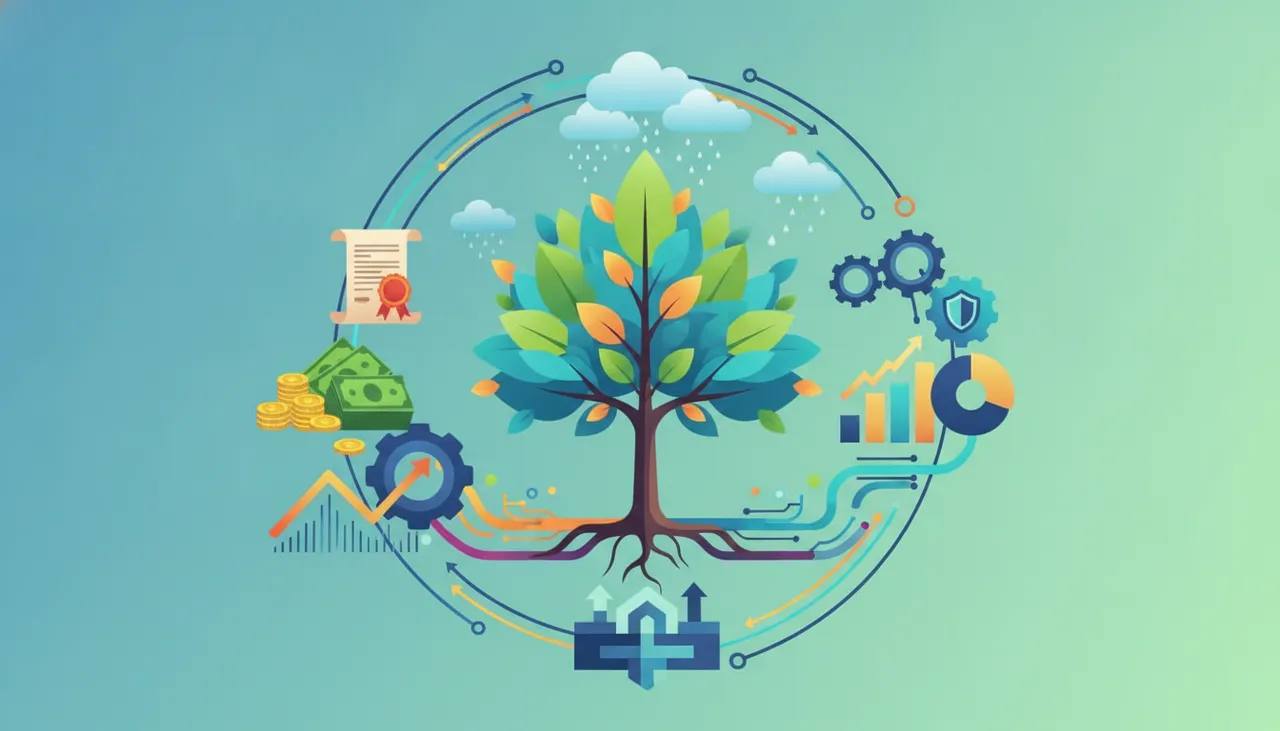
In the rapidly evolving world of startups, where innovation accelerates and competition for capital intensifies, founders face a significant challenge: how to secure the necessary funding for growth without relinquishing a large stake in their companies. This is where non-dilutive funding emerges as a strategic and smart solution for startups in 2026 and beyond.
What's New
Non-dilutive funding refers to any form of capital a company obtains without issuing new shares, giving up equity stakes, or voting control. This contrasts with dilutive funding, such as traditional venture capital, where investors exchange shares for money.
In 2026, non-dilutive funding options include government grants, R&D tax credits, Revenue-Based Financing (RBF), and venture debt. For example, the venture debt market reached $27.8 billion in 2025 and is growing 6-7% annually. RBF has grown over 62% annually, with a market volume of $9.77 billion in 2025.
These tools are significantly evolving thanks to modern technologies; AI tools are being used to automate complex grant applications and compliance requirements, allowing founders to build blended capital stacks that optimize long-term valuation and retain total board control.
Why It Matters
Non-dilutive funding is crucial for startups for several reasons in the 2026 environment:
- Preserving Ownership and Control: This type of funding allows founders to maintain full control over their companies and avoid diluting their equity, which is vital in early stages where strategic decisions are critical. This can lead to a higher company valuation in future funding rounds.
- Flexible Repayment: Unlike traditional loans with fixed payments, revenue-based financing often adjusts to the company's revenue streams. In months with lower revenue, payments decrease, providing significant flexibility and easing cash flow pressure.
- Increased Venture Capital Attractiveness: Companies using non-dilutive funding for their initial stages can demonstrate to traditional VCs their ability to achieve efficient growth and maintain a strong ownership structure, making them more attractive for larger funding rounds later on.
- Faster Funding Timeline: Some non-dilutive funding options, such as RBF, can provide capital within a few days to a week, compared to weeks or months for traditional VC rounds.
Real-World Examples:
- Pipe: The Pipe platform provides revenue-based financing for businesses with recurring revenue and subscriptions. It connects founders with capital providers who purchase the company's future subscription revenue at a discount, providing immediate liquidity without dilution.
- Lighter Capital: Offers non-dilutive funding for SaaS and tech companies, with amounts ranging from $50K to $4M, and repayment capped at a fixed multiple based on Monthly Recurring Revenue (MRR) and growth trends.
- Outfund: This company allows businesses to secure necessary capital without dilution or personal guarantees, with repayment based on a percentage of monthly revenue.
How to Practically Benefit (Tools/Steps):
- Accurately Assess Your Needs: Before seeking funding, clearly define the amount you need and how you will use it. Is it for runway extension, working capital, or growth funding?
- Research Grant and Tax Credit Sources: Explore government grants and local programs targeting startups in your industry. Programs like SBIR and STTR in the U.S. offer non-dilutive funding for companies engaged in federal R&D with commercial potential. AI tools can assist in identifying suitable grants and streamlining the application process.
- Consider Revenue-Based Financing (RBF): If your company generates predictable, recurring revenue (such as SaaS or e-commerce models), RBF is an excellent option. Companies like Pipe, Lighter Capital, and Capchase offer RBF solutions tailored to these models.
- Explore Venture Debt: If you have already secured equity funding but need additional capital without further diluting your ownership, venture debt can be a suitable option.
- Utilize Smart Platforms and Tools: Platforms like FundRobin use AI to automate grant applications and facilitate access to non-dilutive funding.
- Build a 'Blended Capital Stack': Do not limit yourself to a single source. Startups can combine grants, tax credits, and revenue-based financing to build a robust and sustainable capital stack.
Understanding and utilizing non-dilutive funding strategies in 2026 will give startups a crucial competitive edge, enabling them to grow and innovate while preserving founders' original vision and control over their future.







Comments 0
No comments yet — be the first to share your thoughts.
Share your thoughts
To comment, sign in first — we email you a one-time code (no password). This keeps the discussion clean.
Sign in to comment →