
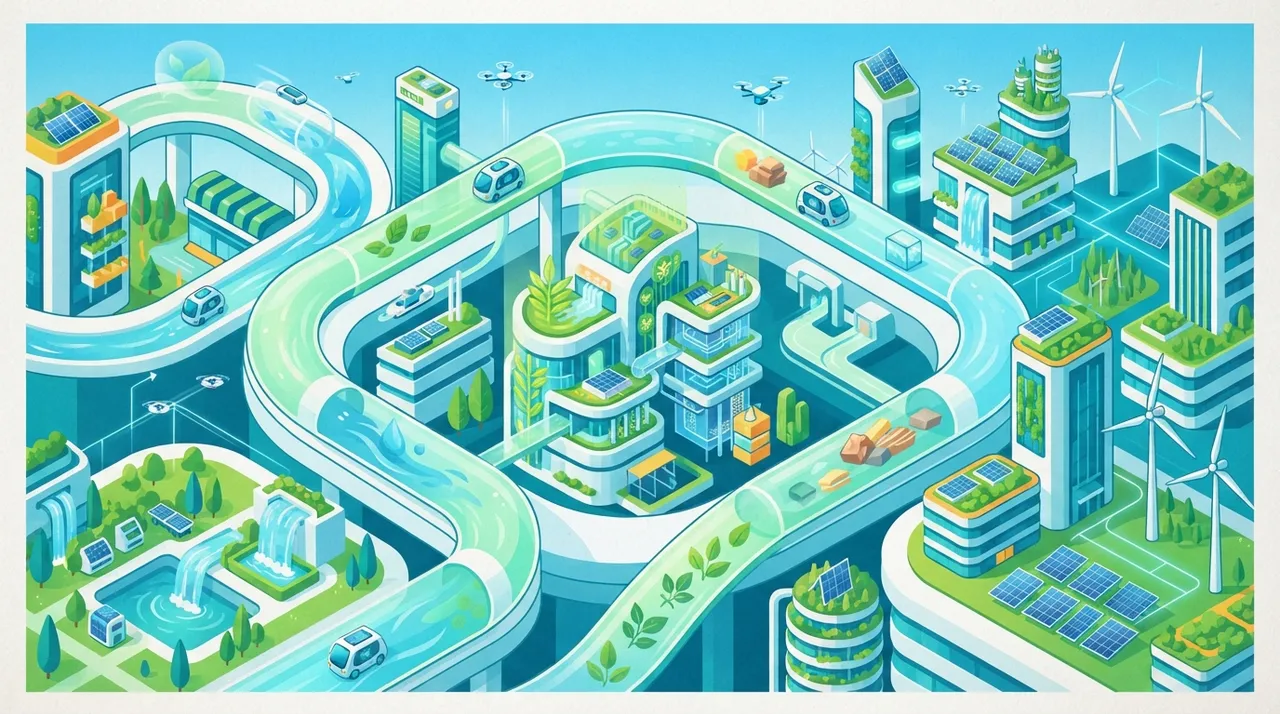
In light of increasing climate challenges and the urgent need for innovative environmental solutions, the circular economy is emerging as a strategic growth model for startups. Focusing solely on financial growth is no longer sufficient; integrating environmental, social, and governance (ESG) considerations into core business strategies has become imperative. Startups in this field demonstrate a remarkable ability to transform waste into resources, recycle materials, and reduce carbon footprints, opening new avenues for both sustainability and profitability.
What's New: Startups Lead the Transformation
Startups are significantly accelerating the transition towards a circular economy through their innovations across various sectors. While traditional industries resist change due to financial commitments and entrenched habits, startups bring fresh perspectives, bold ideas, and creative solutions to persistent problems.
- Advanced Recycling and Waste Management: Companies like Cyclic Materials are creating circular supply chains for rare earth elements, turning waste into valuable raw materials. Other companies like KWOTA focus on digitizing supply chains for secondary and recycled materials, verifying carbon reductions achieved through increased recycling. Resourcify offers a platform for businesses to manage, track, and improve their recycling, reducing costs and administration.
- Innovative Sustainable Packaging Solutions: Startups such as Pulpex develop renewable packaging solutions using sustainably sourced wood pulp. Solubag offers patented biodegradable materials that replace single-use plastics and dissolve in water.
- Carbon Capture and Utilization Technologies: Startups like Climeworks and Heirloom Carbon are investing in direct air capture (DAC) technologies to permanently store CO2. Carbon capture startups closed $1.2 billion in funding in the first three quarters of 2024, marking the second-highest annual tally in five years. Climeworks, having raised over $1 billion in total, leads this sector. Crew Carbon integrates carbon removal technologies into wastewater treatment facilities to accelerate mineral weathering processes that permanently store atmospheric CO2.
- Green Hydrogen: Green hydrogen, produced using renewable electricity and water electrolysis, offers a low-carbon alternative for industries that are difficult to electrify directly. The global green hydrogen market is expected to grow from $8.45 billion in 2025 to $190.64 billion by 2034, with a CAGR of 41.4%. Green hydrogen startups raised over $7 billion in 2024 alone, exceeding the combined total of the previous three years.
Why It Matters: Economic and Environmental Opportunities
The circular economy offers not only environmental benefits but also significant economic opportunities for both startups and investors.
- Attracting Sustainable Investments: Sustainable finance, which integrates ESG considerations into financial decision-making, is a key driver for attracting capital. Social venture capital funds provide funding to startups that prioritize social and environmental goals. Sustainable financial practices enhance a startup's social and environmental impact, attracting clients, investors, and partners committed to sustainability.
- Risk Reduction and Improved Performance: Sustainable finance can enhance long-term returns through risk management and performance, and provide access to new opportunities in growth sectors and innovation. Startups embracing sustainability can also secure loans at cheaper interest rates and with more flexible terms.
- Innovation and New Market Creation: Circular economy startups contribute to the development of innovative technologies and solutions to address climate change. By rethinking business models and operations, such as using circular economy models to turn waste into valuable resources, startups can reduce the need for raw materials and bring sustainable alternatives to market faster. Companies that create new ideas in this area can become global industry leaders.
- Government Support and Regulations: Governments and regulatory bodies play a crucial role in promoting green finance by providing frameworks, incentives, and regulatory support. For instance, Germany has committed $7 billion to industrial decarbonization, including carbon capture and storage (CCS) technologies.
Circular economy startups are a fundamental driver of the transition towards a more sustainable future. By integrating technological innovation and sustainable business models, these companies not only contribute to environmental protection but also offer promising investment opportunities and redefine the concept of growth in the 21st century. For readers looking to benefit from this trend, it is advisable to seek out startups that offer real and tangible solutions to sustainability challenges, focusing on those demonstrating scalability and the potential for broad positive impact.





Comments 0
No comments yet — be the first to share your thoughts.
Share your thoughts
To comment, sign in first — we email you a one-time code (no password). This keeps the discussion clean.
Sign in to comment →