
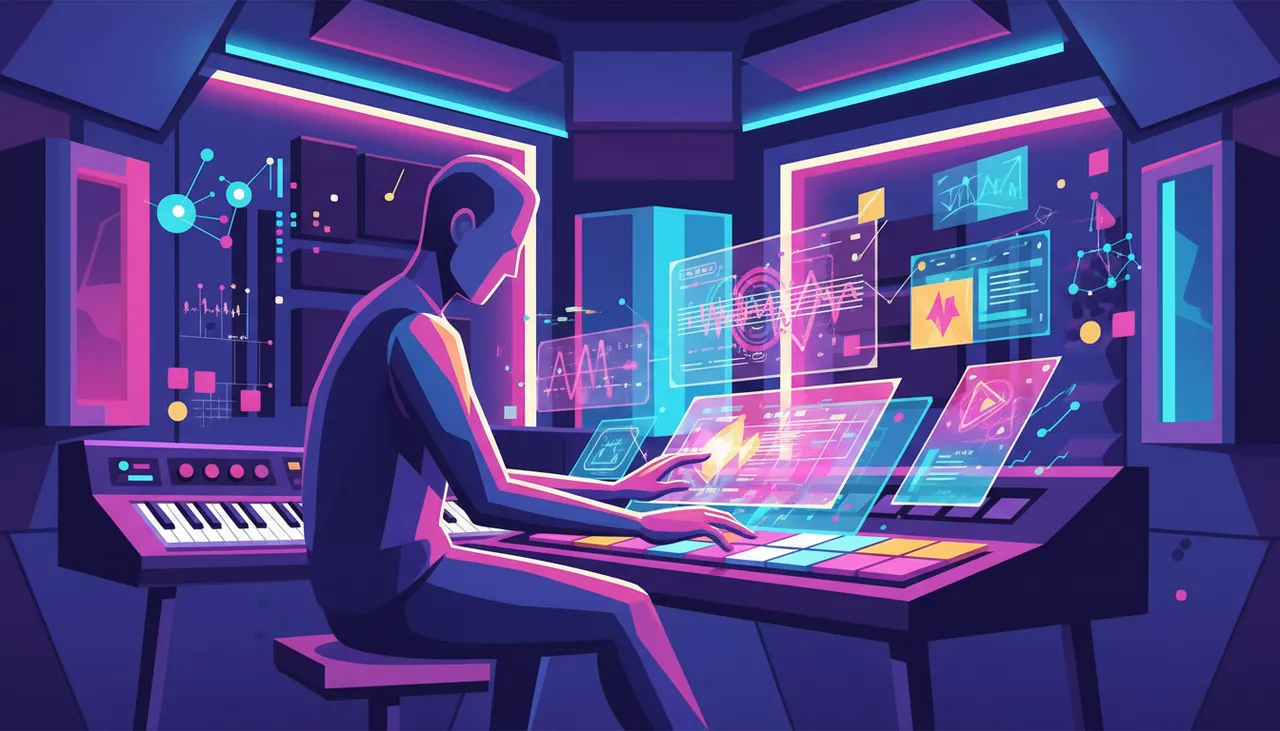
The music industry is undergoing a profound transformation, with artificial intelligence now an indispensable tool for artists and content creators. In 2026, AI is no longer just a futuristic concept; it's a practical, accessible technology that can revolutionize how music is created, distributed, and monetized. For aspiring musicians, independent artists, and digital content creators, understanding and applying AI in their workflow is key to expanding their audience and unlocking new income opportunities.
AI: Your Creative Co-Pilot in Music Production
AI's capabilities in music production extend far beyond simple automation. It can act as a creative partner, helping artists overcome writer's block, experiment with new genres, and refine their sound. Imagine an AI that can generate melodies based on a specific mood or a rhythm that complements your vocal style. This isn't science fiction; it's the reality of modern music production.
- Melody and Harmony Generation: Tools like Amper Music and AIVA can create original musical motifs, chord progressions, and even full compositions based on your parameters. This frees up artists to focus on lyrics, vocal performance, or instrumental arrangements.
- Style Transfer and Remixing: AI can analyze the stylistic elements of existing music and apply them to new tracks, allowing for innovative remixes or genre fusions. This opens doors for unique artistic expressions and intellectual property exploration.
- Automated Mastering and Mixing: AI-powered mastering services such as LANDR can optimize your tracks for various platforms, ensuring professional sound quality without the need for expensive studio time or specialized engineers. This democratizes high-quality production for independent artists.
Audience Expansion Through AI-Powered Marketing
Creating great music is only half the battle; reaching the right audience is equally crucial. AI offers powerful tools for targeted marketing, helping artists connect with listeners who are most likely to appreciate their work.
- Personalized Content Recommendation: AI algorithms on platforms like Spotify and YouTube analyze user preferences to recommend music. Understanding how these algorithms work and optimizing your content accordingly is vital for visibility.
- Data-Driven Social Media Strategy: AI can analyze social media trends, identify optimal posting times, and even suggest content topics that resonate with your target demographic. This allows for more effective engagement and community building.
- AI-Generated Ad Copy and Visuals: Tools can create compelling ad copy and engaging visual assets for marketing campaigns, tailored to specific audience segments. This streamlines the promotional process and improves campaign performance.
Monetization Avenues in the AI Music Era
The integration of AI also creates novel opportunities for musicians to generate income, extending beyond traditional royalties and live performances.
- Licensing AI-Generated Compositions: Artists can license their AI-assisted compositions for various uses, including film scores, video game soundtracks, and commercial advertisements. This is a burgeoning market for unique, customizable audio.
- Selling AI-Powered Music Packs and Sound Libraries: Creators can develop and sell unique sound packs, loops, and instrumental tracks generated or enhanced by AI to other musicians, producers, and content creators.
- Offering AI Music Production Services: With expertise in AI music tools, artists can offer their services to businesses or individuals who need custom music for their projects, from podcasts to corporate videos.
Practical Steps to Integrate AI into Your Music Career
- Start with a Specific Goal: Identify what you want to achieve with AI: better melodies, improved marketing, or new income streams. This focus will guide your tool selection.
- Experiment with Free or Trial Tools: Many AI music platforms offer free tiers or trials. Begin by experimenting to understand their capabilities and how they fit into your creative process.
- Learn the Basics of Prompt Engineering: For AI music generation, learning how to write effective prompts is crucial. The better your prompts, the more tailored and useful the AI output will be.
- Integrate AI Incrementally: Don't try to overhaul your entire workflow at once. Start by integrating AI into one aspect, such as idea generation or mastering, and gradually expand.
- Stay Updated with AI Advancements: The field of AI is rapidly evolving. Regularly follow tech news and music industry publications to stay informed about new tools and trends.
- Build a Community Around Your AI-Enhanced Music: Share your AI-assisted creations on social media. Engage with your audience, explain your process, and build a unique brand identity around your innovative approach.
Embracing AI in your music career in 2026 is not about replacing human creativity but enhancing it. It's about leveraging powerful tools to amplify your artistic vision, reach a broader audience, and build sustainable income streams in a dynamic digital landscape. The future of music is a harmonious collaboration between human ingenuity and artificial intelligence.
Comments 0
No comments yet — be the first to share your thoughts.
Share your thoughts
To comment, sign in first — we email you a one-time code (no password). This keeps the discussion clean.
Sign in to comment →